
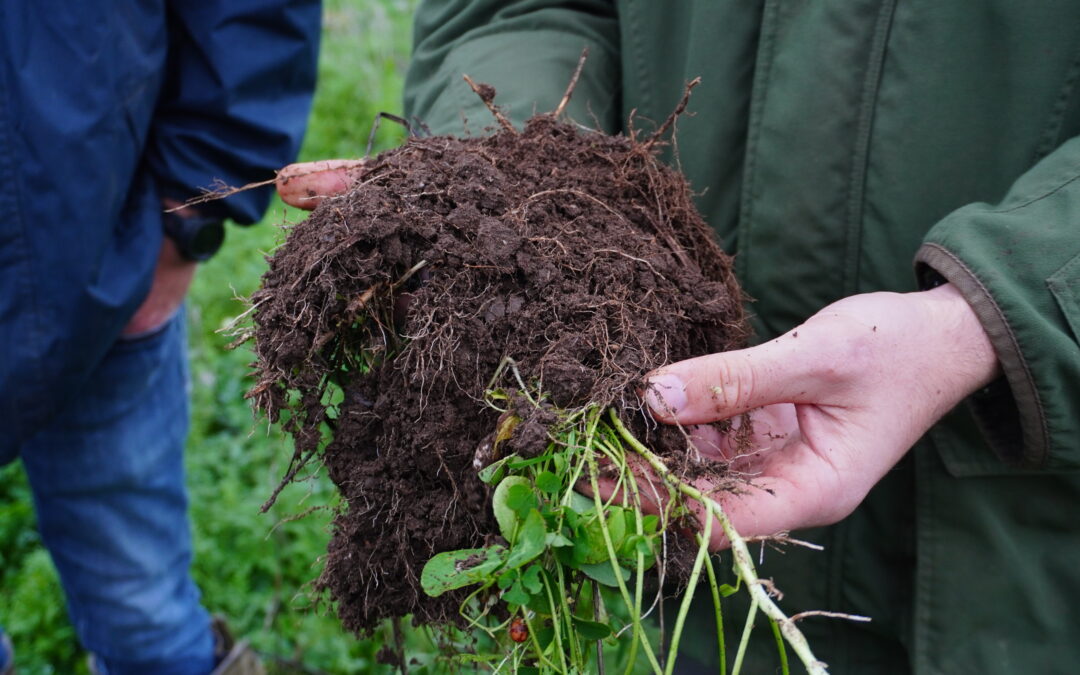
Soil carbon is a key indicator of healthy farmland, but its benefits extend far beyond crop productivity. Increasingly, UK farmers and catchment managers are recognising the link between soil carbon and water quality. By building soil organic matter, farmers can reduce nutrient runoff, improve water retention, and support cleaner rivers and streams.
Understanding Soil Carbon
Soil carbon refers to organic carbon stored in soils, largely from decomposed plant material and roots. It is vital for:
- Soil structure: Higher carbon content improves aggregation, reducing erosion.
- Water retention: Soils with more organic matter hold water better, buffering crops against drought and heavy rainfall.
- Nutrient cycling: Carbon-rich soils retain nutrients like nitrogen and phosphorus, preventing leaching.
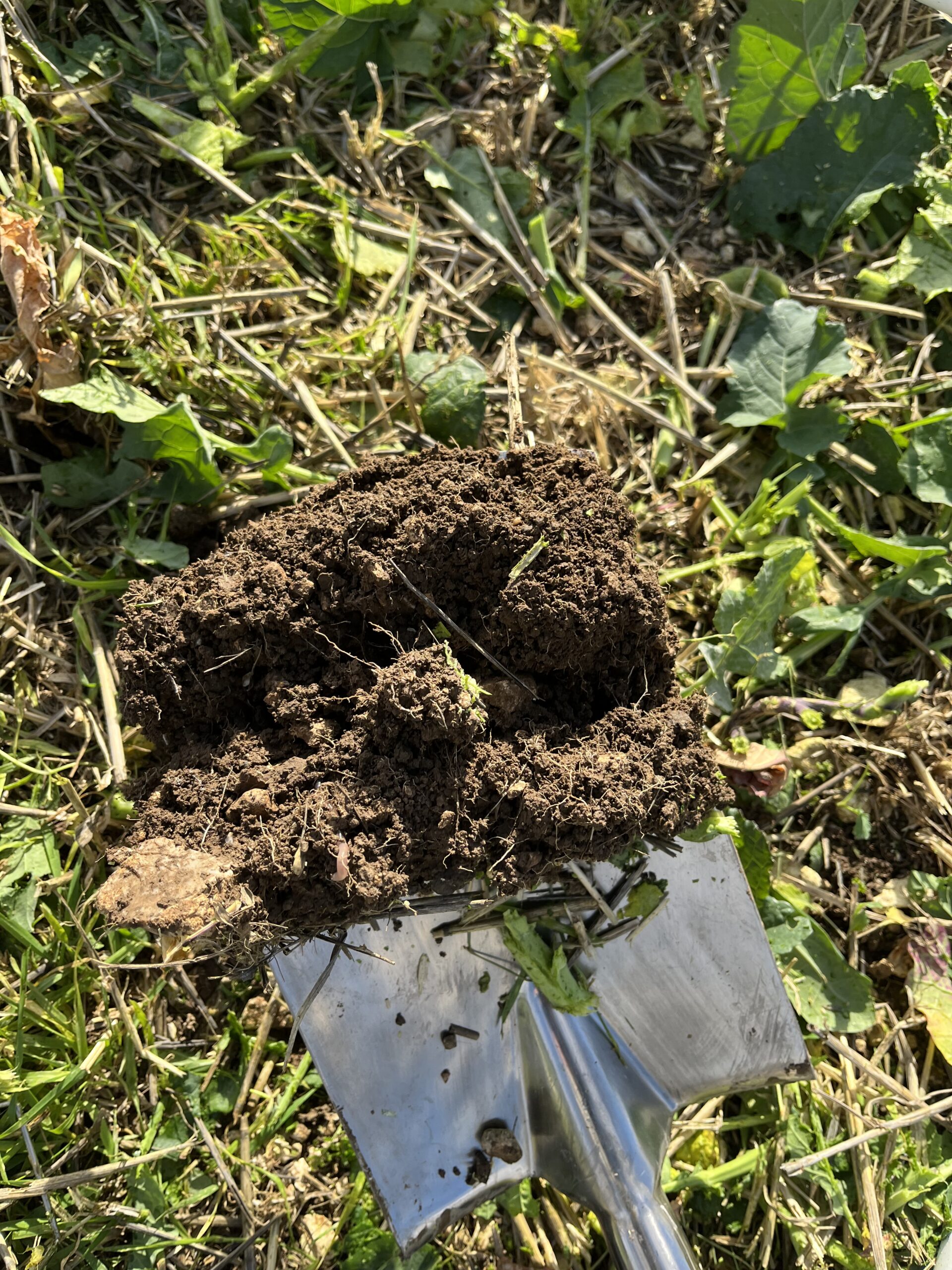
How Soil Carbon Affects Water Quality
- Reduces Erosion and Sediment Loss
- Soils rich in organic matter are better structured and less prone to surface runoff.
- Stable soil aggregates prevent sediment washing into rivers and streams, protecting aquatic habitats.
- Minimises Nutrient Leaching
- Organic matter increases the soil’s ability to retain nitrogen and phosphorus, reducing losses during heavy rainfall.
- This lowers the risk of eutrophication in nearby watercourses, which can cause algal blooms.
- Improves Water Infiltration
- Healthy soils with high carbon content allow water to infiltrate rather than flow over the surface.
- Reduced surface runoff means fewer pollutants enter rivers and streams.
- Supports Natural Filtration
- Soil acts as a filter, breaking down or retaining chemicals before they reach watercourses.
- High carbon soils enhance microbial activity, improving natural nutrient processing.
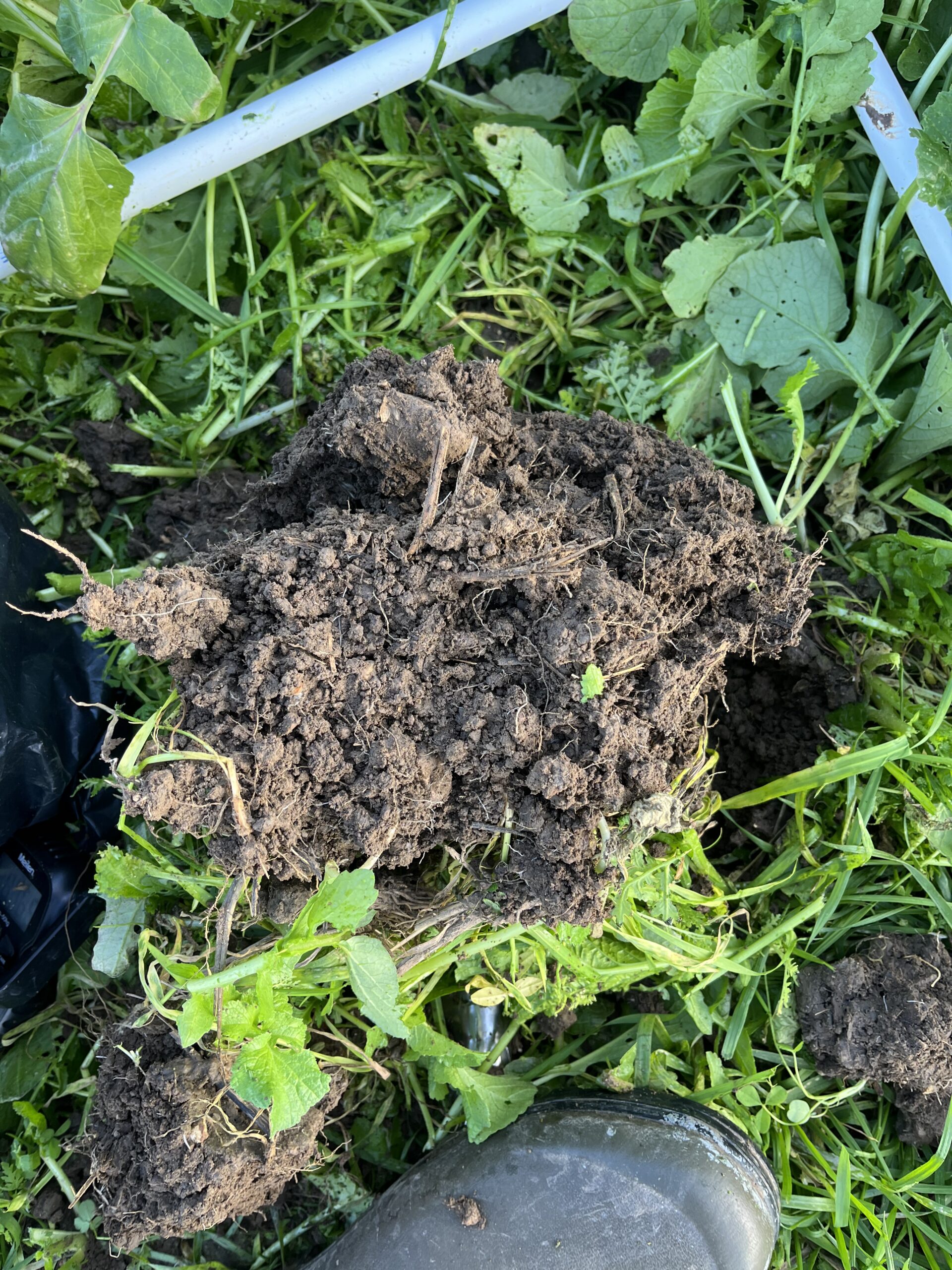
Practical Ways Farmers Can Boost Soil Carbon
- Cover Crops
- Planting cover crops over winter protects soil from erosion, improves organic matter, and retains nutrients.
- Reduced or No-Till Systems
- Minimising soil disturbance preserves organic carbon and improves soil structure.
- Organic Amendments
- Adding compost, manure, or digestate increases soil organic matter and nutrient retention.
- Crop Rotations and Deep-Rooted Crops
- Rotating crops and including deep-rooted species enhances carbon storage and soil stability.
- Buffer Strips and Field Margins
- Vegetated margins trap sediment and nutrients before they reach watercourses, complementing soil carbon benefits.

Top 5 Quick Tips to Protect Water and Build Soil Carbon
- Plant cover crops after harvest to protect soil over winter.
- Adopt reduced or no-till practices to preserve organic matter.
- Apply organic amendments where appropriate to boost carbon.
- Use diverse crop rotations including deep-rooted species.
- Establish buffer strips along waterways to trap sediment and nutrients.
Conclusion
Soil carbon and water quality are closely connected. By increasing soil organic matter, farmers can improve soil structure, enhance water infiltration, reduce nutrient and sediment runoff, and protect watercourses.
Integrating practices such as cover crops, reduced tillage, organic amendments, and buffer strips ensures healthier soils, cleaner water, and more resilient farms in the long term.

FAQ: Soil Carbon and Water Quality
Q1: How quickly can improving soil carbon impact water quality?
A: Benefits like reduced runoff and nutrient retention can be seen within the first season if combined with cover crops and buffer strips.
Q2: Does higher soil carbon affect crop yields?
A: Yes. Healthy, carbon-rich soils improve soil structure, water availability, and nutrient retention, often boosting yields.
Q3: Can livestock grazing affect soil carbon?
A: Managed grazing can increase organic matter through manure and root growth, but overgrazing or poaching can reduce soil carbon and increase runoff.
Q4: Are all soils equally responsive to carbon-building practices?
A: Sandy soils benefit quickly from organic matter additions, while heavier clay soils may require more time to see improvements in structure and infiltration.
Q5: Can soil carbon improvements alone solve water quality issues?
A: Soil carbon is critical, but combining it with buffer strips, drainage management, and careful nutrient application maximises water protection.
External Resources Worth A Read
- Nature.com – Soil Carbon Storage
- Agricology – The Soil Carbon and Water Resilience Project